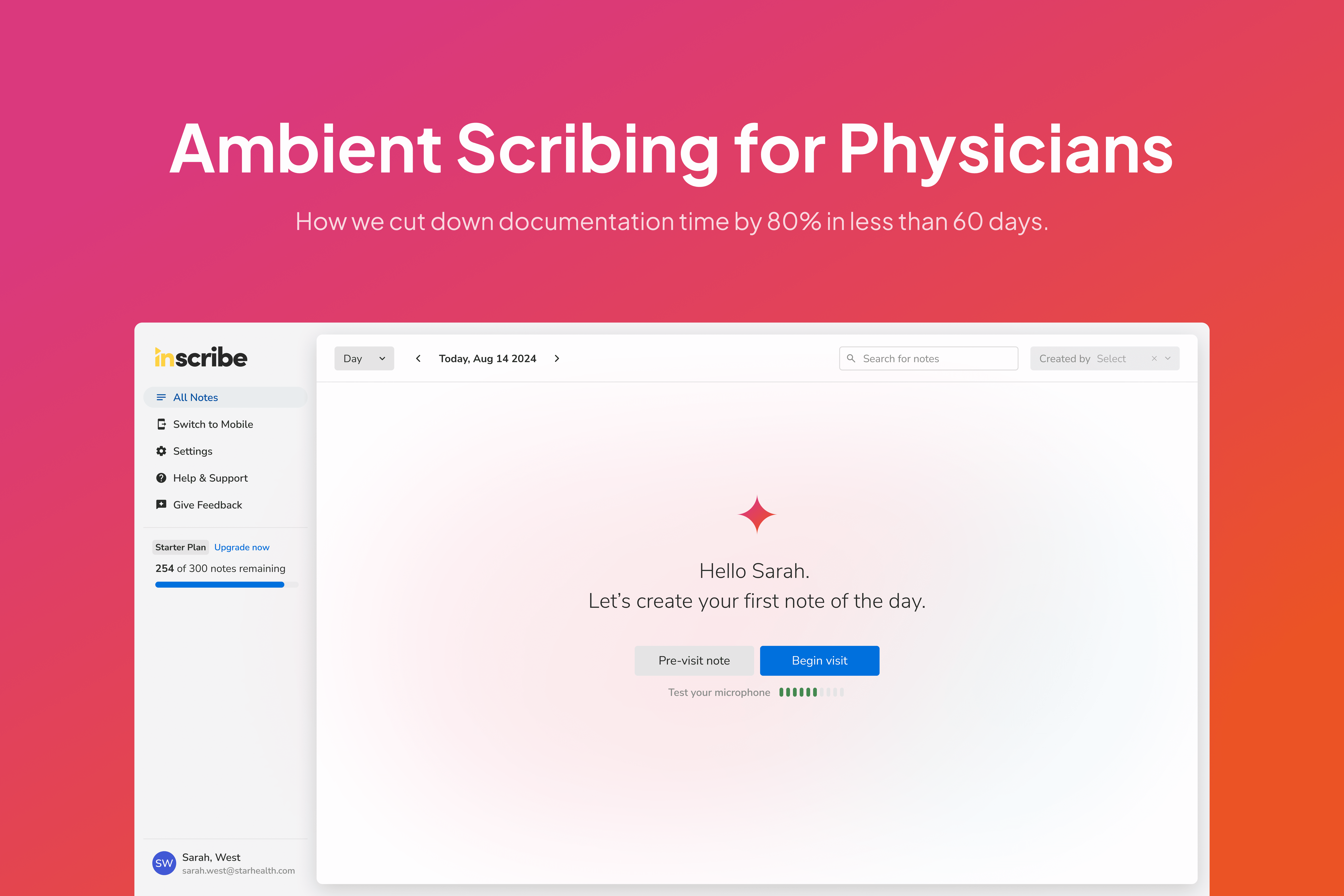
It’s 6:30 PM.
Dr. West has just seen her 18th (and last) patient of the day.
However, her work at the clinic isn’t quite done yet.
She now faces two more hours of visit documentation - critical, time-sensitive work that she’ll likely have to take home with her.
This is going to be a long day.
Again.
For the majority of physicians in the United States, this is the norm — nearly a third of their day is spent on charts instead of conversations.
What if doctors could just see patients, not screens? What if the documentation just…wrote itself?
This is the story of how an idea conceived at a hackathon became our first ever SaaS solution, all within 60 days.
Let's bring back the joy of care.
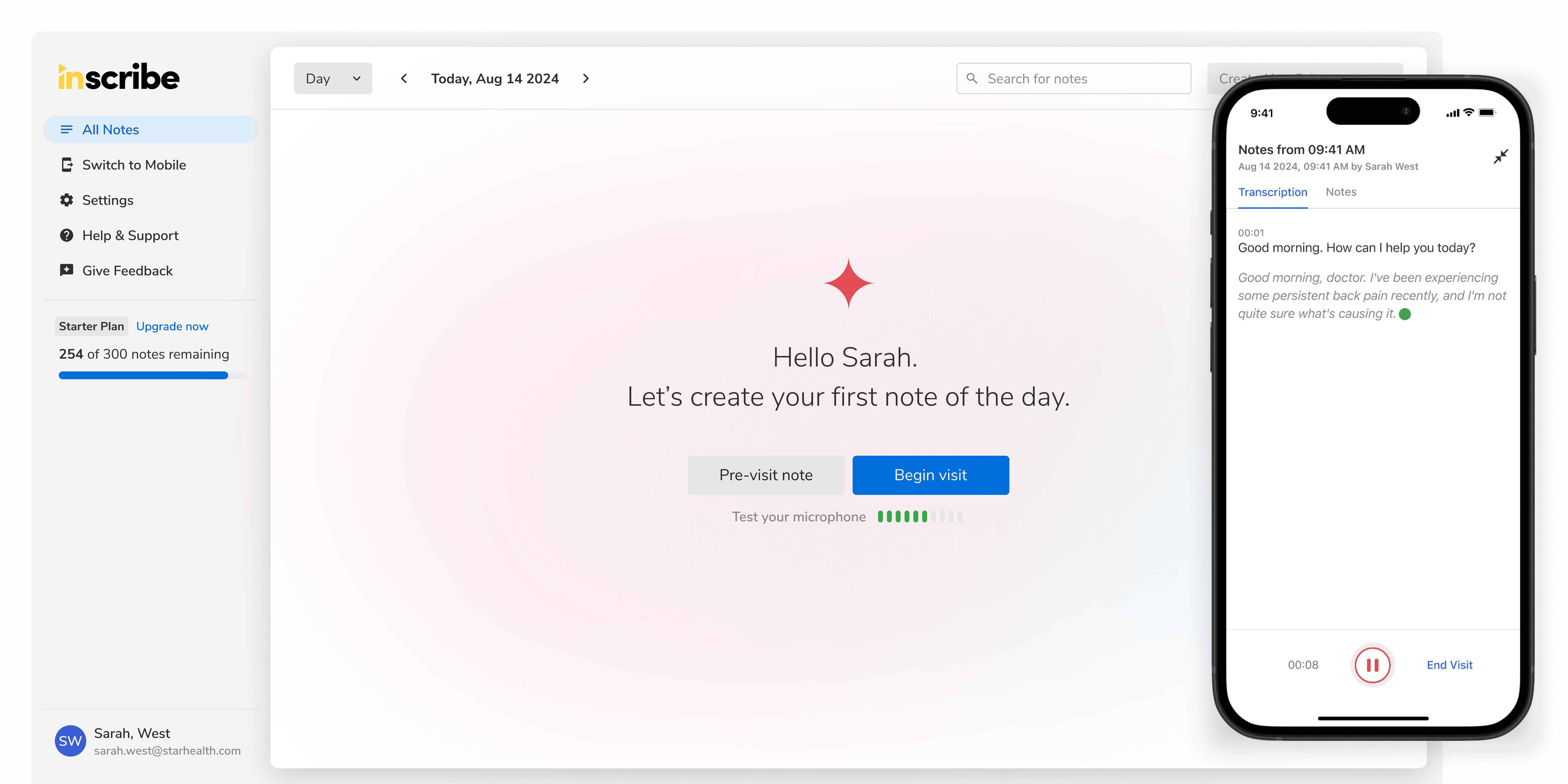
My Role
Led product design + research throughout. Wore multiple other hats (product, marketing and even support) during the initial launch phase.
The A-Team
We were a lean team: one product designer (🙋♂️), three developers (2 BE, 1 FE), 1 shared QA, two clinical SMEs and occasionally, our then CPO and Head of Design.
Timeline
<10 weeks to the initial launch in January 2024 — still going strong with new updates as of December 2025!
The Initial Spark
In 2023, Innovaccer hosted an internal hackathon to explore how AI could transform healthcare workflows.
With over three years of designing for physicians, I knew the documentation burden was one of their biggest pain points. We set out to build a tool that could automatically capture and structure physician–patient conversations into clinical notes — in just 72 hours.
I facilitated workshops to align on user needs and workflows, designed the interface, and collaborated with engineers as they tested AI integrations. We refined prompts through scenario-based role play, iterating quickly until the experience felt natural.
By the end of the weekend, we had a working prototype, a killer presentation, and matching dark circles as our badges of honor.
Our concept won the hackathon and within weeks, our leadership assembled a dedicated team to develop it into a market-ready solution.
Fun fact - I also joined a team in the ‘non-tech’ category, and our Patient Intake solution (for the step right before scribing) ended up winning too!
Why Notes Hurt?
With the green light to move forward and build the product, it became essential to first gain a clear, evidence-based understanding of the problem we aimed to solve.
With no product manager in place yet, I took the lead on mapping the problem space—starting with a deep dive into consulting reports and relevant research studies.
INSIGHT #1
68%
of physicians reported feeling burned out in 2023 - the highest it had ever been.
INSIGHT #2
53%
of them said that excessive documentation and poor work-life balance was to blame.
INSIGHT #3
15+ hrs / week
of 'pyjama time' - additional after hours work of documentation and charting on EHRs - was reported by the majority of physicians.
As we dug deeper, it became clear the problem was more complex than we first thought.
To get to the root of it, we stepped back and looked at the bigger picture—breaking down the US healthcare ecosystem into its core constituents.
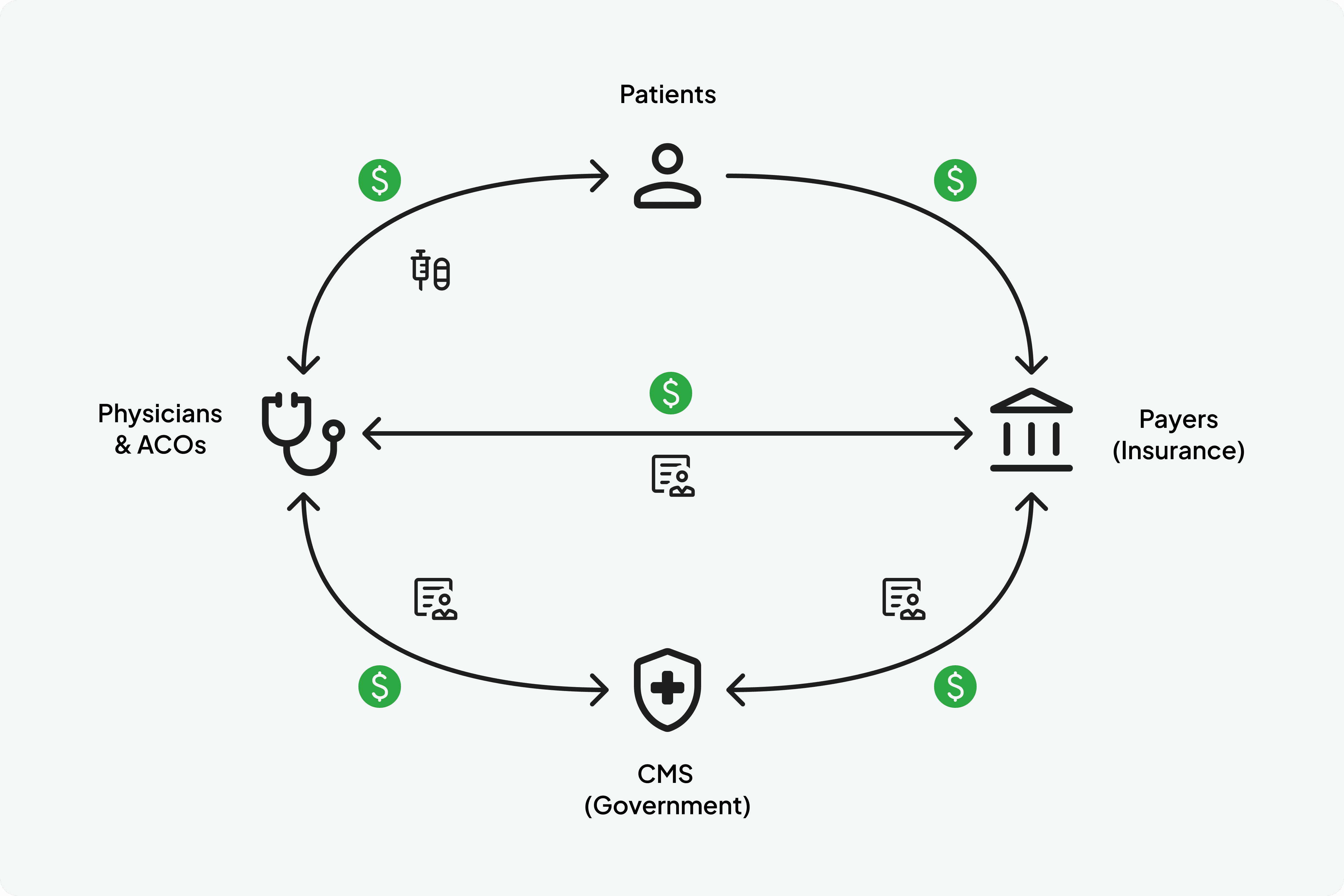
Notice anything common?
Speaking to some more industry experts, it became evident that there were two major driving factors behind this documentation burden:
Regulatory Oversight
CMS and other government agencies prescribe strict regulations and enforce stringent record keeping for patient safety, quality and compliance.
Payer-Led Payments
Payers require additional, exhaustive documentation to prove medical necessity of clinical services for reimbursement, and prevent payment fraud.
It was precisely because compliance and payments were so intertwined that physicians had to focus more on documentation than patients - proving quality of care to regulators and proving billable services for payers.
This is also when it hit us that reducing the documentation burden would have a much broader impact on the entire ecosystem than we had earlier imagined.
Less Burnout
=
Deeper Patient Interactions
Better Care Outcomes
More Patient Visits
Problem Statement Here
Meet the Physicians
The next step was to understand the current workflows of our end users. Physicians being our primary user base for a while now, I had developed a fair understanding of the persona at the time.
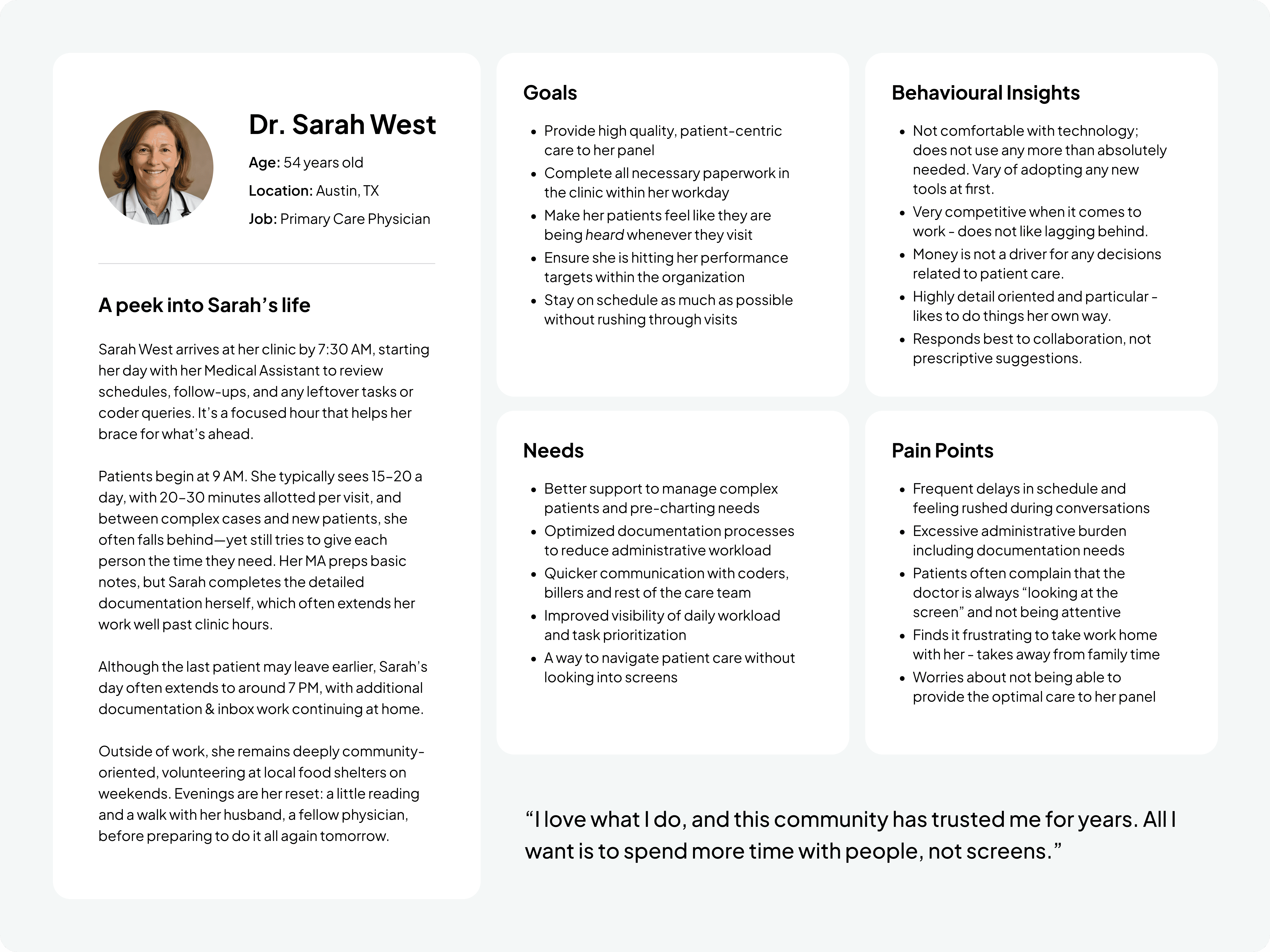
However, solving for documentation meant we had to dig deeper at each step. In order to do this, I connected with internal SMEs (ex-physicians) and external physicians through platforms like Tegus & GuideHow among others to hash out a detailed journey map.
Journey Map Visual
During these calls, I was also able to probe more about which step in this journey caused the most 'stress' to the end users, and what part of it were they most comfortable with.
Workflow Map with Comfortable vs Friction marked
This understanding of the journey and the gaps allowed us to approach the problem with a well informed, holistic perspective.
Behold, the Visit Note itself
Armed with an understanding of the persona, the journey and the primary points of friction, we set out to understand the nuances of the actual Visit Notes themselves - and, we were in for a surprise!
All Medical Data that goes into a note.
Not only did these notes contain a laundry list of medical data, but the way it was presented also varied immensely.
Specialty, Visit Type, EHR (Structure), Personal Preferences, Level of Detail and Payer Guidelines Visual
All of the above factors played a role toward what a finalized visit note looked like. However, we couldn't possibly fine tune all of these for the MVP - this is where our recurrent calls with the SMEs and external physicians came in handy.
We were able to share our research with them, and together narrowed down the factors that would be critical to a note, so that we could focus on those during our initial launch.
Structure & Style
Structure: This was essential since these 'sections' were often defined by the EHR, and any other format would not be compatible with their systems.
Style: Physicians were very particular about writing notes as bulleted lists for each diagnosis or as holistic paragraphs combining them - furthermore, downstream workflows of code reviews and billing were also tailored around this, making configurability a must.
Visual outlining what we parked for later
Parallel Tracks
Being a very small team, we always had multiple initiatives active on most days. Owing to this, I was also involved in product strategy and engineering/implementation discussions.
Why Saas?
While this was ultimately a directive from our CPO, we did have to present our capabilities, potential merits and demerits around both SaaS, Enterprise and even FaaS approaches before SaaS was finalized:
SaaS Strategy Visual
Picking an AI Model
While this was primarily an engineering driven decision, I was able to work with our lead engineer to highlight to them that consistency of responses, HIPAA compliant hosting and a generous token limit were essential based on the research we had by that point.
AI Model Visual
Monetizing
We also worked with our product marketing team to figure out which was the best pricing model, and what would be the right amount based on our expected AI costs.
Pricing Model visual
Getting to Work
It was finally the time to build out a solution - we had the problem, the journey, the gaps, the approach, the tech and the nuances - all we had to do was put it all together. Sounds deceptively easy, for some reason.
I started by doing a quick round of competitive research - we weren't the first movers and we had to deliver quickly, so it didn't hurt to see what others were doing.
Competitive Research Visual
This gave me a good idea of what the market was offering; while we couldn't do all of it, there were some key things we zeroed in on after validation with our clinical experts.
Key Features Visual
Why Mobile is Key Visual
With this, our scope for the MVP was locked:
MVP Scope Visual
To get started with the visuals, I drafted the architecture and key workflows for the solution.
High Level IA
Create Note Workflow Map Visual
Once we had these in place, I started with some lo-fidelity iterations to see how to structure our interface in a responsive, scalable manner.
LowFid Iterations
After a few days of internal feedback, I was able to land on a design we felt comfortable testing out with some potential users. We used platforms like GuidePoint to recruit these users and ran a usability test with the first iteration.
Findings Visual
Based on the results of the usability test and some other comments we got from our ELT, I refined the solution and and crafted the final versions that were ready to ship!
Final Solution Visuals
Final Solution Visuals
Final Solution Visuals
Impact Over Everything Else
Timeline Visual with Nasdaq Photo
We launched in a crowded space (literally and figuratively) - but the traction was immediate.
1000 Users, 1/3 of benchmark Visual
Our net weekly retention rate hovered around 40%, and over the next 6 months we were able to convert 3 enterprise contracts based on the SaaS beta.
We didn't stop there; over the next few quarters, we made the offering more robust by running regular user feedback sessions, introducing more features, enabling more customization and refining our prompts to generate more accurate notes in lesser time.
Update Strategy & Cadence Visual
Personal Outcomes
Quote on Learning
This project was one of the best learning experiences I could have asked for - the learnings extended not only to soft and hard skills in the purview of design, but went well beyond that.
While it is difficult to say which one is the most important, there are a few where I was able to make the biggest strides.
Top 3 Learnings
What Next?
What about those enterprise contracts? How do we tailor the solution for them? Well, extending the capabilities of InScribe to our existing enterprise offering (a smart desktop overlay) was another challenge in itself.
Enterprise NDA Hook with Contact CTA